
HASC News
Connecting Research, Impact and the Future of Advanced Connectivity
Researchers, industry partners, government and funders came together in Oxford on 29 September for the HASC Showcase 2026. Together, we celebrated the depth and breadth of research across our Hub and explored how innovation in advanced connectivity can translate into real-world impact.
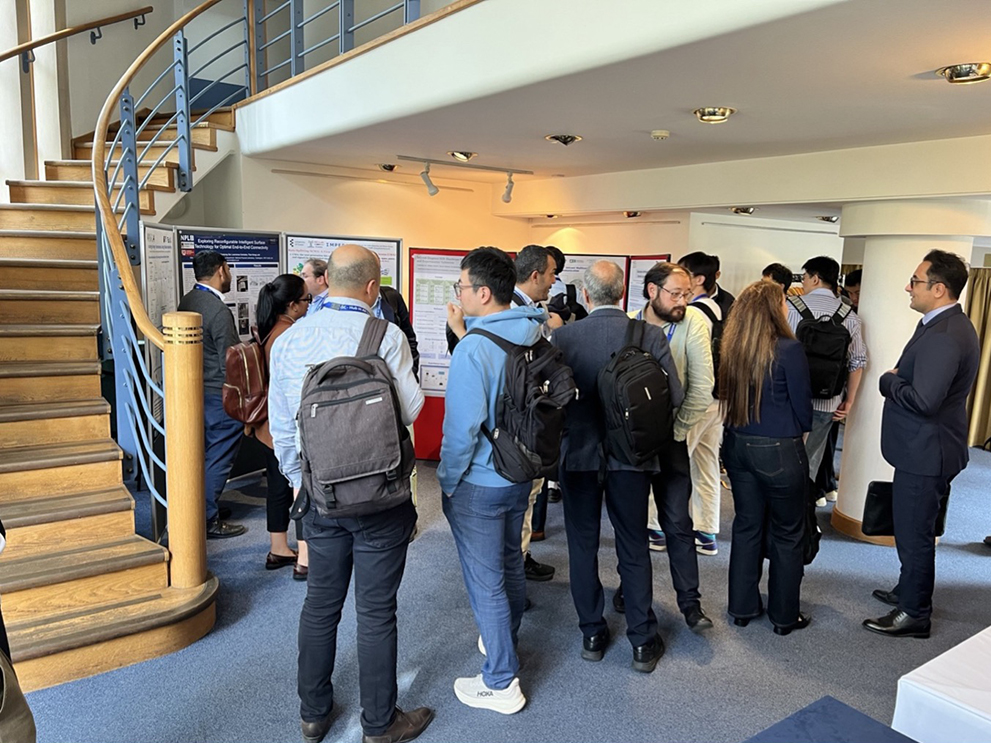
Hosted at St Anne’s College, Oxford, the Showcase provided an opportunity for the HASC community to share its research highlights, explore translation and impact, and engage with perspectives from across the wider advanced connectivity ecosystem.
From emerging technologies and future network capabilities to security, resilience, spectrum and commercialisation, the day highlighted not only what our research is making possible, but some of the wider questions that will determine how those advances ultimately make a difference to the world around us.
Professor Dominic O’Brien, Director of HASC, said:
“The Showcase was a valuable opportunity to bring the HASC community together and reflect on the breadth of research and progress taking place across the Hub. Just as importantly, it allowed us to connect that research with perspectives from industry, government and our wider community. These conversations are vital if we are to understand where advanced connectivity research can make a real difference and help translate new capabilities into practical applications.”
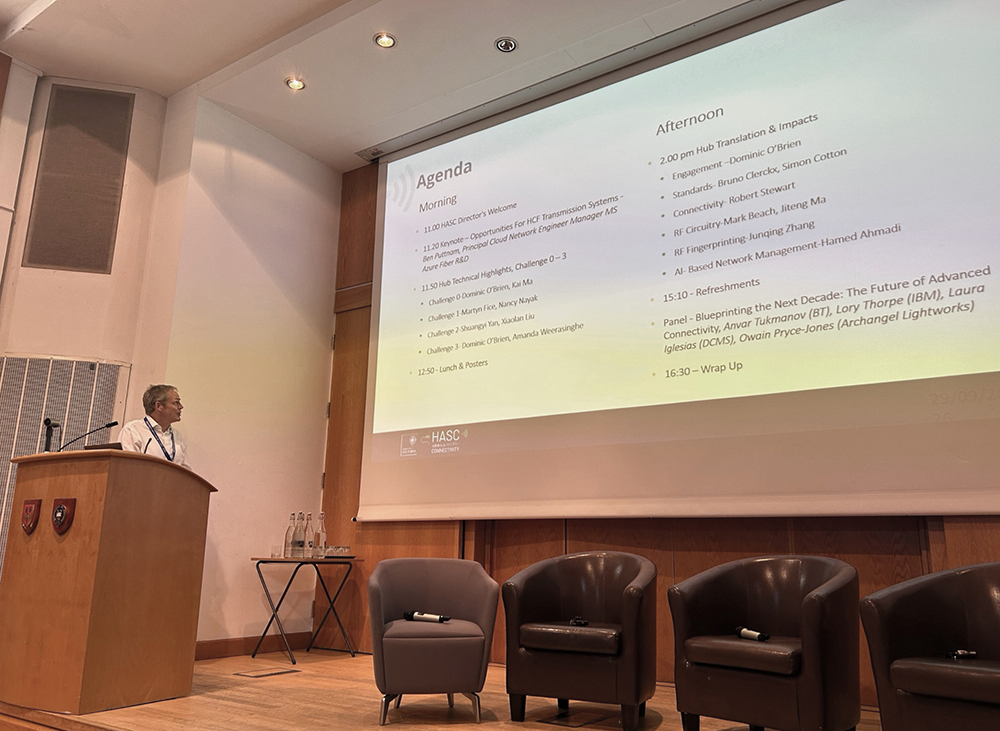
Research Across the Connectivity Landscape
Following a welcome address from Professor O’Brien, the technical programme opened with a keynote from Dr Ben Puttnam, Principal Cloud Network Engineer Manager at Microsoft Azure Fiber R&D, exploring Opportunities for HCF Transmission Systems.
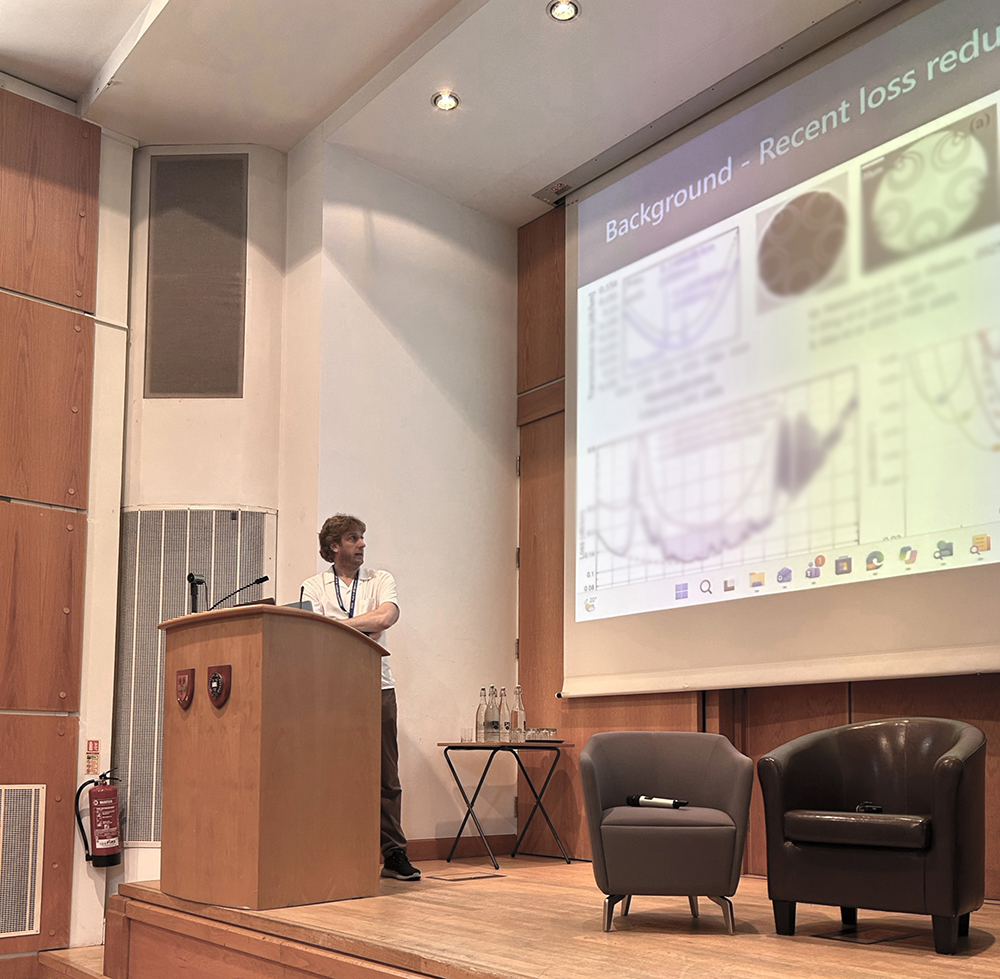
Researchers from across HASC’s four research challenges of Measurement & Modelling, Connectivity, Adaptivity and Security, then shared technical highlights from their work, reflecting the scope of expertise brought together through the Hub. Presentations included work spanning connectivity, mATRIC and the Spectrum Digital Twin, and quantum technologies.
From Research to Real-World Impact
The afternoon shifted the focus from technical research towards translation and impact, exploring how research across HASC is beginning to connect with wider technological and industry challenges.
Presentations reflected the range of activity taking place across the Hub, spanning standards, connectivity, resilient and agile technologies for future networks, security and AI-based network management.
Together, they highlighted the importance of looking beyond technical capability alone to consider how research can move towards practical application.
Translation is rarely the work of research in isolation. It depends on understanding real-world requirements, engaging with industry and policymakers, and creating the conditions in which new ideas can be tested, developed and ultimately adopted.
That wider question – what will it take to turn technological possibility into meaningful real-world capability? – provided a natural bridge into the final discussion of the afternoon.
Blueprinting The Next Decade of Advanced Connectivity
Chaired by Professor Simon Cotton from Queen’s University Belfast, Blueprinting the Next Decade: The Future of Advanced Connectivity brought together perspectives from across industry and government.
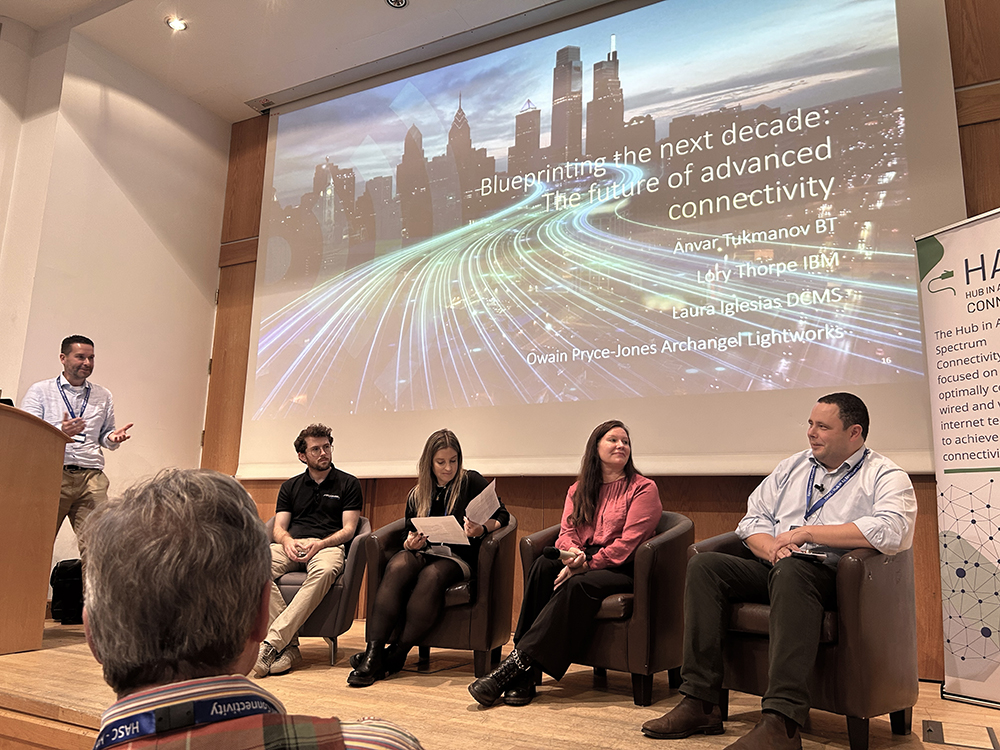
The panel featured Anvar Tukmanov from BT, Lory Thorpe from IBM, Laura Mejuto Iglesias from DCMS and Owain Pryce-Jones from Archangel Lightworks, with discussion ranging from the changing 6G landscape to AI, quantum, future infrastructure, spectrum policy and the role of academia.
One theme to emerge was the growing importance of security and resilience. As our reliance on connected infrastructure grows, future networks will need not only to deliver greater capacity and capability, but to address an increasingly complex security landscape. The conversation also touched on the way connectivity intersects with wider questions around policy, infrastructure and geopolitics.
The discussion also challenged the idea that the future of connectivity is simply about progressing towards the next generation of mobile technology. With the shape of 6G still developing, attention turned instead towards understanding the capabilities that future networks will need to provide – and, crucially, the problems they need to solve.
For new technologies to move from research into widespread deployment, however, technical capability must be accompanied by a compelling case for adoption. Deployment comes at a cost, and the panel reflected on the importance of demonstrating value and return on investment alongside technological innovation, especially when connectivity is viewed as given.
Reflecting on the discussion afterwards, panellist Laura Mejuto Iglesias, Head of Spectrum Innovation Policy at DCMS, highlighted the importance of government understanding not only what emerging connectivity technologies can do, but what we actually need them to deliver, where they can make a difference, and what will help turn innovation into real-world applications.
Spectrum is an important part of that challenge: ensuring access does not become a barrier to innovation, while recognising that innovation in how spectrum is used and shared can itself unlock new possibilities.
It is a question that goes to the heart of the Showcase: how do we connect technological possibility with real-world need?
Connecting Research, Industry and Policy
Finding those answers requires more than research alone.
The HASC Showcase brought together researchers and investigators alongside industrial partners, government and funders, creating space not only to present work, but to exchange perspectives and explore the challenges surrounding its eventual application.
Across technical presentations, posters, discussions and networking throughout the day, the event demonstrated the value of bringing together different parts of the advanced connectivity ecosystem.
As technologies develop and the demands placed on future networks continue to evolve, the connections between research, industry and policy will remain critical to understanding where innovation can make a difference – and what is needed to turn technological capability into meaningful impact.
Thank you to everyone who presented, contributed to the discussions and joined us in Oxford for the HASC Showcase 2026.