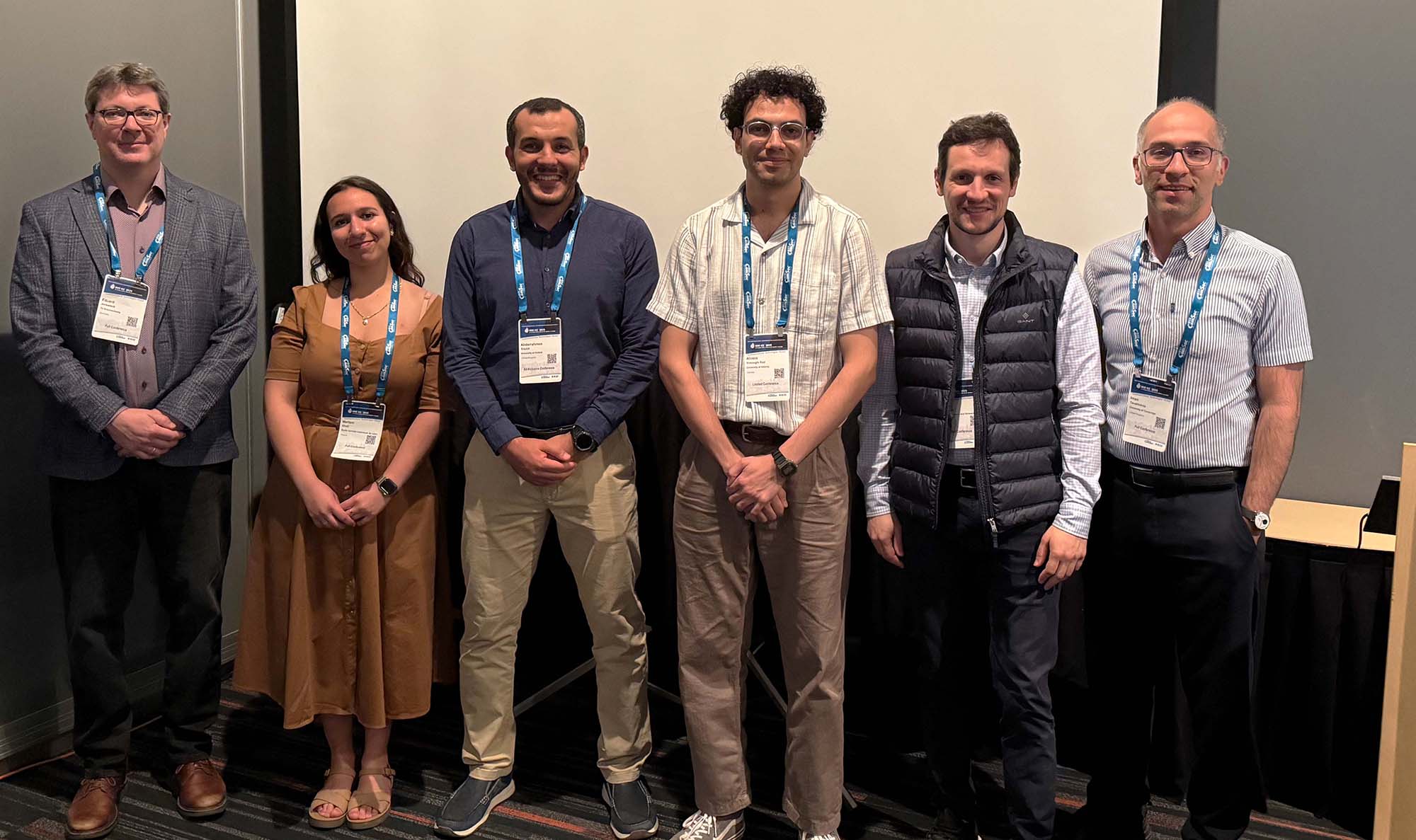
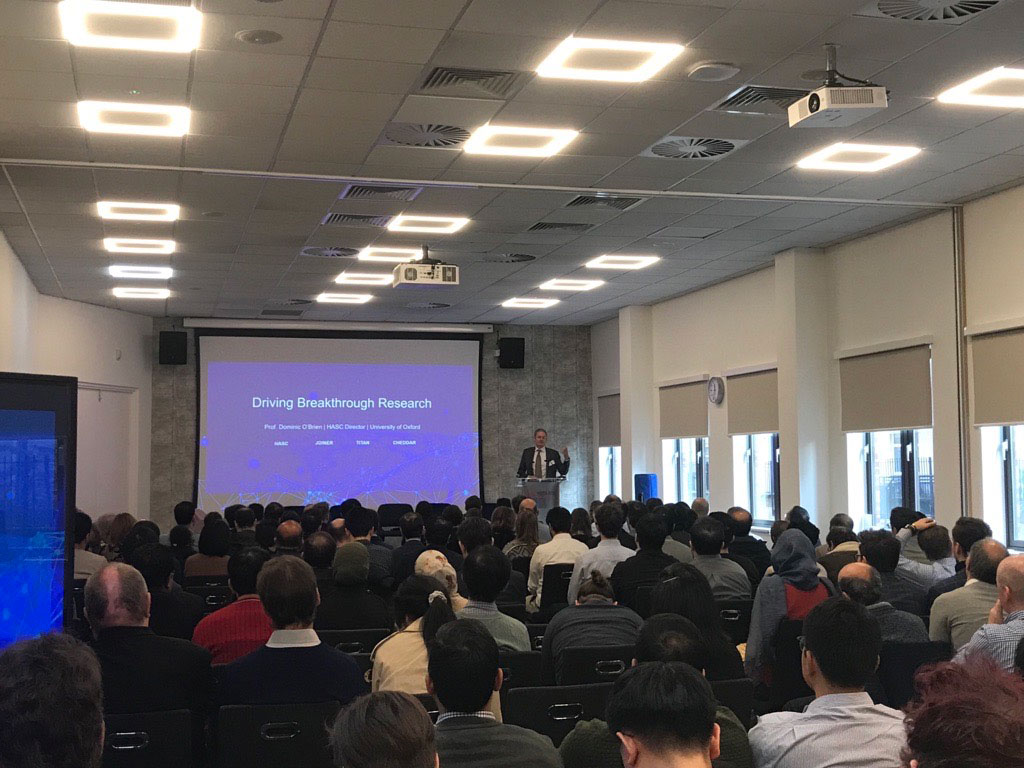
In June we had the pleasure of welcoming Stephen Mayers to an event held together with The Federated Telecom Hubs and The Department of Business & Trade. The event was aimed towards our research community and discussed the support available to drive research from the lab to commercialisation. Bridging the gap between lab and enterprise is where real-world impact can be realised, which is a vital step in making sure scientific discoveries make the leap into driving real society impact and progress for good.
After the event, HASC caught up with Stephen to find out more about the world of spinouts in telecommunications and he provided a wealth of tips and advice. This interview is for anyone interested in exploring what commercialisation could look like for their research, with practical insights, funding know-how, and inspirational success stories.
About Stephen Mayers
Stephen has a strong telecoms background, originally studying electrical and communication engineering at university, and later moving into fixed telecommunications. He joined what was to become Orange Mobile (phones) in the early 1990s and whilst at Orange, Stephen was part of the team that created the first 2G network in the UK. He has spent the majority of his 40-year career in mobile comms, with the last decade supporting spinouts from universities.
You can watch the video below or via the HASC YouTube channel, but here is a quick summary of some of the incredibly valuable advice shared.
Content Disclaimer
Please note that this summary is an abridged and paraphrased account of the full interview, highlighting key insights and top tips shared by Stephen Mayers. For full context, please refer to the video recording. Let’s get into it.
We kicked things off by asking,
…what the most common challenges are when translating scientific discovery into real world applications or commercial ventures?
Stephen discussed two main challenges and made the following strong points:
- The challenges start with making sure that academics understand the distinction between features and benefits. Academics are solving a technical issue, but the next step is how this translates into business value and impact.
- Secondly, making sure that there is a large enough available market for the new technology. This is important if you are to monetise your IP, and it also needs to be attractive to investors.
Stephen provided a real-world scenario to accompany these points (please refer to the full transcript or video below).
We wanted to know,
…where do we see the biggest gaps in that journey from research to market and how can we begin to address them more effectively?
Stephen provided examples specific to a telecommunications scenario. He said, “the world of telecommunications today is very complex, and the whole ecosystem is very challenging.”
The reasons he provides for this are as follows (abridged):
- There are now multiple operators and multiple different vendors trying to offer an end to-end solution, particularly with the advent of 5G private networks
- Entrepreneurs need to foster relationships across the whole eco-system
- They need to understand their own core competencies, what they are offering and also what gaps they might have in their offering (for example, this could be the access to supply chain, or access to talent etc.)
- Entrepreneurs and researchers should leverage organisations such The UK Telecoms Innovation Network (UKTIN) and lean into the support offered by The Federated Telecoms Hubs
We asked Stephen if he was able to,
… share any success stories, or any lessons learned that might help researchers to navigate this commercialisation process?
Stephen told us that although not impossible, it can be challenging to break into the major MNO’s (Mobile Network Operators) such as, BT or Vodafone or Three. There are, however, ways to navigate these challenges. In Stephen’s opinion, here are the main challenges and his advice:
- Large MNOs typically have a yearly budget cycle and a yearly strategic cycle which means their budget for the year ahead is already set. For any new enterprises trying to break in, this can represent a challenge
- The second reason is that, as a new entrepreneur, there is no trading history, and this is deemed “high risk” to the MNO’s and MNOs are risk averse
- Stephen’s advice is to find a way to initially work with the existing vendors or partners of the MNO or through the system integrators (of which there are many)
- As you begin to establish yourself and begin to generate revenue, it might be that you can forge your own contract and your own direct relationship with the MNO
- All this requires someone on your board that has the “little black book” [of contacts], so the importance of networking and building relationships becomes key. This is another example of where an organisation like Digital Catapult can sometimes help.
We discussed,
… why is it so important, that work reaches beyond the lab and how can successful commercialisation shape the wider society and future of telecoms?
In Stephen’s opinion, the world is getting ever more complex as we move into the era of 6G and Gen-AI solutions, with a vast number of different actors and network vendors all needing to collaborate and work together. But what does this mean for entrepreneurs?
Stephen told us:
- It is important to bring a fresh perspective with entrepreneurs from the high research universities beginning to collaborate with enterprises and getting niche offerings in into market
- Stephen offered his perspective on what he considers is that the biggest challenge, and that is an environmental one. As compute power and more services moving into the cloud and Gen-AI applications, the overall power consumption and the impact to the environment is growing to significant levels
- We need solutions that answer the challenge of sustainable tech
And finally, we wanted to know,
… what is the one thing Stephen wished every early career researcher knew about working with industry?
We were not surprised with the response. There are a few final thoughts:
- Stephen wanted to stress to us the importance of networking. He said,
- “…don’t stay in the lab – all your customers and your user community are outside of the lab!”
- Once you begin to get some traction it’s more and more importance that researchers and entrepreneurs harness the power of digital marketing to really promote their solution and build a personal profile.
- Remember to talk about real-world benefits and not just technical features.
The discussion was packed full of value, and we strongly encourage you to watch the full interview where Stephen goes into even more detail with real case studies.
We would like to extend our gratitude to Stephen for the time and knowledge he has generously shared with us. You can connect with Stephen here.
Watch the video
Please watch the video and please share this content with anyone you think may also benefit from this content.
If you enjoy content like this, or if you would like to find out more about the HASC project and stay up to date with news from across the hub, you can sign up for regular updates here.
Full Interview Transcript
CARLA: Good morning, Stephen, thanks for joining us today! Before we kick off, it would be really useful if you could just provide us with a little bit of context and maybe a bit about your experience within the field of research commercialisation and also the creation of spinouts… so yeah, it’d be great to have a quick introduction!
STEPHEN: Sure, okay, good morning, Carla. I’m Steve. I originally studied electrical and communication engineering at university, and I very shortly moved into fixed telecommunications, and then joined what was become Orange Mobile (phones) in the early 1990s – whilst at Orange, I created the first 2G network amongst my colleagues and spent [the] majority of my career in the last kind of 30 years in mobile comms.
For the last eight – 10 years I’ve pivoted more into supporting spinouts from universities, so primarily through the UKTIN project and through the I-UK (Innovate UK) Program where I help academics take that idea all the way through to ideation, through the spin out process and help them to understand any possible pitfalls and challenges they might have along the way, and over that journey I think I’ve supported over 50 spinouts through to completion of their business!
CARLA: Amazing! That’s fantastic. It’s so it’s great to have you with us today to talk all about this this subject, so thanks once again. So, we’ll kick off. So, what’s the most common challenges we see when translating scientific discovery into real world applications or commercial ventures?
STEPHEN: Sure, I think there’s probably two main challenges from my perspective Carla, I think the first, is making sure that academics understand the distinction between features and benefits that’s probably the most common issue I see…
And what I mean by that is, they might have a very nice bit of technical science or a very clever bit of IP, but they’re only really kind of solving a technical problem and they’re not understanding how that creates some business value or some business impact to their end customer groups, and end user groups so let me give you an example:
I’ve worked with a company which discovered by analysing a very type of specific protein in a in a blood, they’re able to determine the kind of predilection for that patient having a heart attack – so they had the science there – that was very clear what they needed to do, but it was difficult to translate that into commercial benefit.
And what we managed to work out with them, was to understand that through their analysis they were able to have a handheld device which detected a protein and it didn’t mean that the bloods had to go to the labs – it meant that they able to do “point of care analysis” of the likelihood of a heart attack in a patient, that was taking a matter of hours rather than days, for that blood sample to come back!
Now working with them, we then had to translate that into some sort of business benefit and by virtue of the benefit to the NHS, what that came up with was things like the hospital stays were much reduced, so the amount of cost per bed was reduced, say from 3 days to 5 days also it could be that the likelihood of readmission into hospital was much reduced. So, the overall impact and cost of the NHS, per patient, was significant. I think we got it in the order of £10,000 – £15,000 per patient was saved through the adoption of this this technology!
I think the second problem is, once you’ve established that, is determining that the business problem you’re trying to solve is significant enough! That’s really important from two perspectives: Firstly, because it’s got to be able to generate significant revenues for you and generate revenues at a suitable kind of profit margin to give that repeatable revenue per month, and also if you are looking to seek investment, or you’re looking to seek to get public funding you want to make sure that the problem’s big enough and the market is big enough to elicit interest from your investor community, to make sure that they will get their return on investment.
CARLA: Yeah, some sound advice there. So, with that in mind, where do we see the biggest gaps in that journey from research to market and kind of how can we begin to address them more effectively?
STEPHEN: Okay, we’re taking it back more to a telecom’s context. I think the world of telecommunications today is very very complex, and the whole ecosystem is very very challenging – particularly with the advent of 5G, standalone in the cloud, because you’ve got multiple operators and multiple different vendors trying to offer an end to-end solution.
An example of that could be 5G private networks at port authorities or in smart factories and you’ve no longer got one operator or one vendor bringing the end-to-end solution for their customer group, whether that be the port authority or a smart city, so what the journey that the entrepreneurs would need to understand, they need to kind of foster those relationships across the entire ecosystem for them to be successful in the first place. They need to start to understand their own core competencies about what they’re really good at and what the real assets [are] they’re offering out to their community and then by virtue, what are the gaps that they need to fill?
So, it could be access to supply chain, it could be access to talent that they don’t have at the minute, it could be access to a lab or access to facility or a test lab which enables them to bring their solution to market.
Now where organisations such as UKTIN or the Federated [Telecoms] Hubs can help, is that kind of signposting and that reference point and say “yep! I know I know someone in this field. I know someone in supply chain. I’ve got a really good contact at Digital Catapult or a really good contact at the satellite applications Catapult.”
So, those things are really key because the network across the whole of those enterprise I just mentioned is vast Carla. So, there’s always somebody that we know that we can signpost the entrepreneurs to, beginning to foster the importance of that relationship and understand what gaps they need to fill and how they can go about that.
CARLA: Yeah, fantastic and yeah so important to have those relationships in place -yeah! So, can you share any success stories, or any lessons learned that might help researchers to navigate this commercialisation process
STEPHEN: Yes, so I think again there there’s two and I’d like to discuss, to bring it into a telecom’s context. Any small company trying to break in, if they’ve got a desire to break into the major MNO’s (Mobile Network Operators) such as, BT or Vodafone or Three, that’s going to be significantly challenged for a couple of reasons:
Firstly, because those organisations typically have a yearly budget cycle and a yearly strategic cycle which means their budget for the year ahead is set so for any new enterprise coming in, it’s very very difficult for them to break in.
The second reason why it’s so challenging for them, is they’ve got no trading history, so they’re very “high risk” to the MNO’s and the MNO’s are very risk averse – they don’t really want to be working with very small unproven enterprises, so what we’ve found is a good case study here, is that to break into the big MNOs, you have to really work with existing vendors or existing partners of that that MNO, or crucially some of the system integrators and there’s many many out there that that provide services into the MNO’s and they’re always on the lookout for some ways to enhance or tweak their offering in some way, to give them a better end to-end solution. And it might be, that this vendor or this SI (Systems Integrator) might prime into the MNO and you’re kind of subcontracting into them but it’s a great way to break into the market. And then as you begin to establish yourself and begin to generate revenue, it might be then you can forge your own contract your own direct relationship with the MNO…
CARLA: Brilliant advice!
STEPHEN: …and I think the second biggest gap Carla, is the need to understand you’ll need somebody in your team (either the CEO or the Chair of the board) that has that very extensive relationship within the sector. So, again in the world of telecoms you need to find someone who’s done this before, they’ve got that market reach, they understand the challenges and opportunities within that market, but crucially they also have the a vast kind of “black book” of contacts that they know who to reach, they’ve got established relationships with the key decision makers of these organisations to help you kind of break into that market.
CARLA: And again, it just comes full cycle back to that relationship piece, so it’s relationships…
STEPHEN: …fostering relationships! And that’s where The Federated [Telecoms] Hubs can really really help because they have that vast network, they understand the pain points and they can crucially signpost them into some organisations I mentioned before, such as Digital Catapult.
CARLA: Perfect! So, why is it so important then, that this work reaches beyond the lab and how can successful commercialisation shape the wider society and future of telecoms?
STEPHEN: No! It’s a great a great question! I think it’s again back to the world of getting ever more complex as we move into the 6G era, and kind of Gen-AI solutions, it’s going to get even more complicated about the vast number of different actors and network vendors which need to collaborate and work together and bringing fresh ideas and fresh approaches from research institutions.
I think is really really important to bring that fresh perspective. Most of the MNOs have very strong research hubs. BT for example – What is really important is, that those entrepreneurs from the high research universities begin to collaborate with those enterprises to get some very niche offerings in into market.
But perhaps one of the other biggest opportunities and biggest challenges facing telecoms at the moment is, as we get more compute power and more services moving into the cloud and Gen-AI, the overall power consumption and the impact in the environment is absolutely significant.
So, any research organisations would have solutions and either the ability to do intelligent shutdown of redundant equipment or equipment which is in demand to save the power consumption of the operators is key, but also enabling [to find] more greener solutions, providing power be beyond kind of coal or gas so it could be wind turbine it could be hydro it could be anything really which enables that offering of cleaner energy to the to the sector. And I think that’s the biggest challenges facing the sector at the moment.
The compute centers and the data centers are going to consume vast amounts of power and cooling over the next 5 to 10 years and finding solutions to solve that problem will have a massive impact on the wider society and the future of telecoms as a whole
CARLA: 100% and that’s actually some of the work that we’re doing here in HASC and in fact across all of all of the hubs, so yeah!
STEPHEN: Oh, very good – it’s good it’s good to hear!
CARLA: Yeah, and finally then, what’s the one thing you wish every early career researcher knew about working with industry?
STEPHEN: Okay, well I think I have two things Carla, if that is okay. I think again, the importance of networking and don’t stay in the lab – all your customers and your user community are outside of the lab, so the sooner you can break out of the confines of your university and begin to network and find those relationships, the better!
And the second [piece of] advice I’d give, once you begin to get some traction it’s more and more the importance of digital marketing to really promote your solution – promote the kind of wins and success that you’re having so it could be through LinkedIn, it could be through any other media that begins to publicise all the great stuff you’re doing and begin to sell outside of the confines of a university!
CARLA: So, again relationships! Looking at benefits over features and just really that profile piece and making sure that you’re communicating what you’re doing and the real-world impact, I guess?
STEPHEN: Yes, then by virtue of having this strong digital marketing you will begin to promote those relationships. People respond to your posts they want to network with you. They want to connect with you and that will enable the fostering of the complex ecosystem I was describing before
CARLA: Yeah, perfect! Well, there’s some amazing advice there, so thank you so much for your time – we’re really grateful to you and I’m sure, you know, there’s masses of value there, so once again, thank you very much and thank you – we’ll see you again!