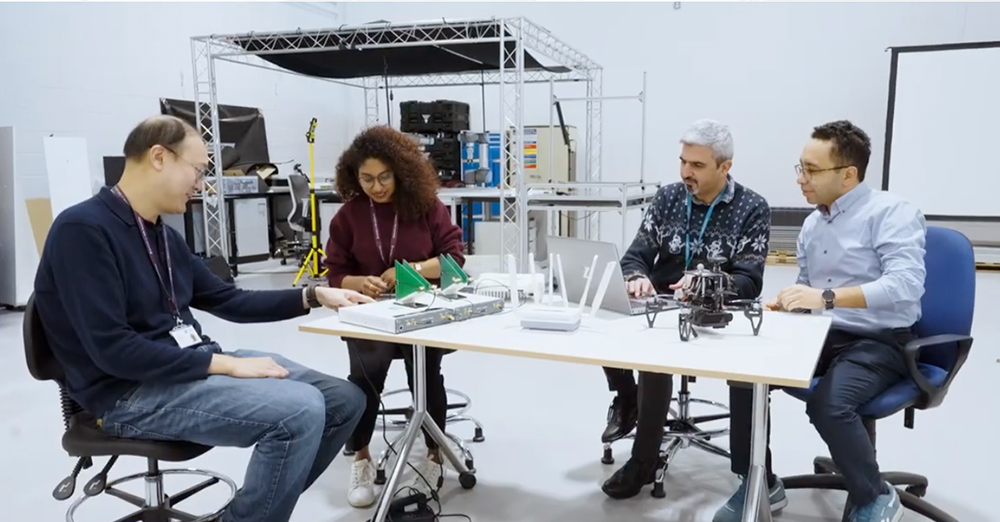
Why Mobile Networks Are Still Building Two of Everything, and the Sheffield Team Changing That

SMALLER, CHEAPER & GREENER MOBILE NETWORK HARDWARE

Mobile networks are quietly one of the most energy-intensive parts of our digital infrastructure. The towers, antennas, and radio units that keep us connected consume enormous amounts of power – and much of that consumption comes not from inefficiency in the obvious sense, but from a fundamental design problem that the industry has largely accepted as unavoidable. That is, until now.
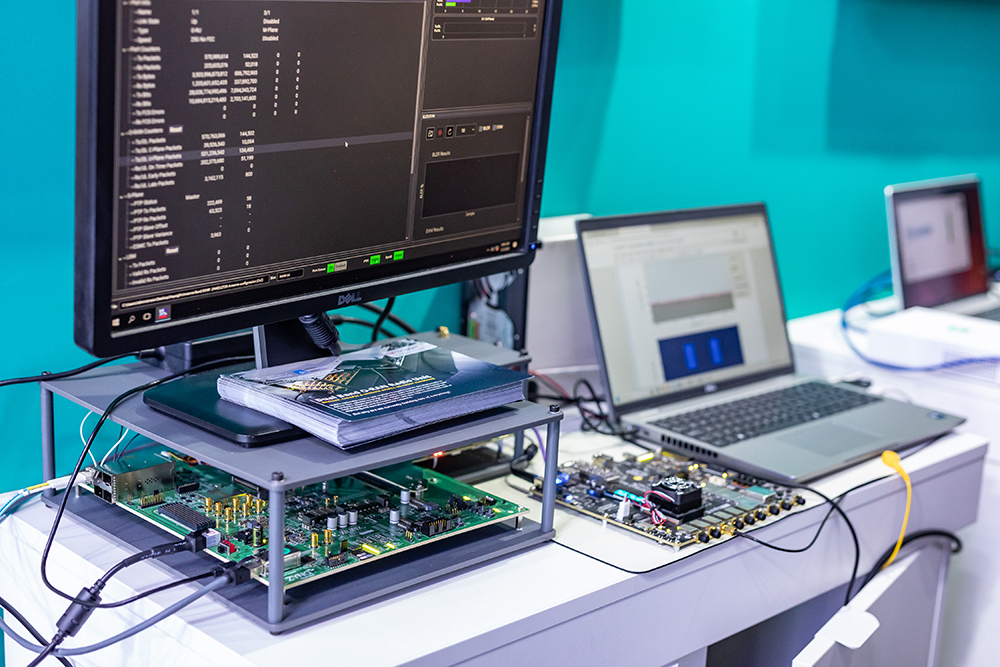
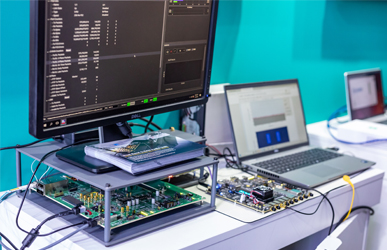
University of Sheffield demonstrates its Dual Band O-RAN Radio Unit at MWC2026

The Problem: Duplicated Hardware, Multiplied Costs

Modern mobile networks operate across multiple frequency bands simultaneously. A single base station might need to serve users on a mid-band 5G frequency while also handling a separate private network on a different band. The way this has traditionally been handled is straightforward, but wasteful: build a separate radio unit for each band.

Two bands. Two sets of hardware. Two sets of power draws. Two sets of components to manufacture, deploy, and maintain.

Multiply that across thousands of base stations and the cost and carbon implications become significant. It’s one of the reasons that energy expenditure is a major operational burden for mobile network operators – and a genuine obstacle to meeting net-zero targets.

The question the University of Sheffield’s Wireless Communication Systems team set out to answer through the YO-RAN project was simple: why are we building two of everything, and can we stop doing that?
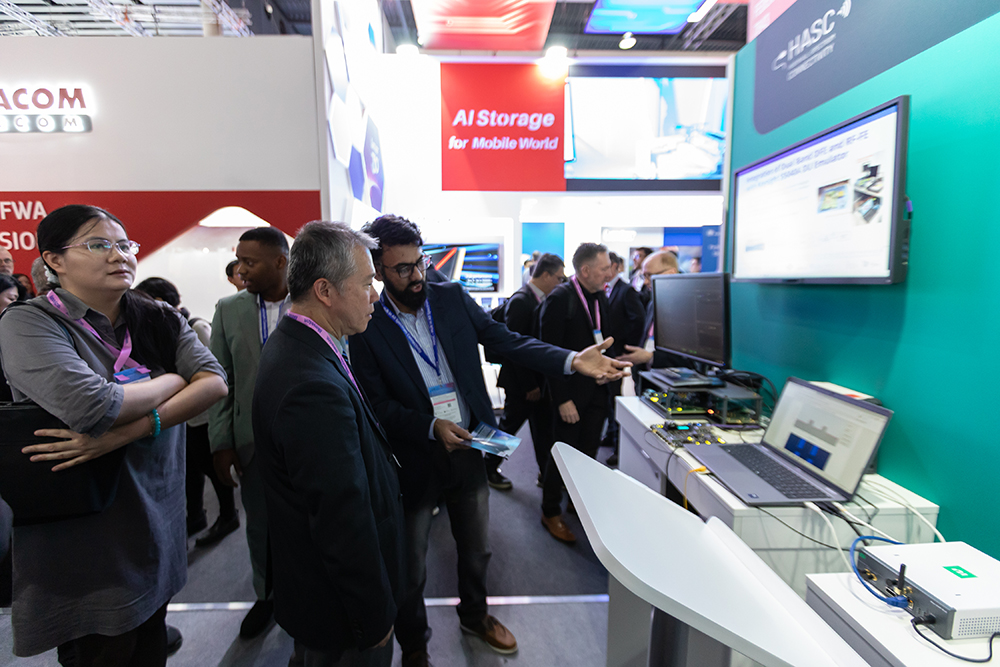
From top to bottom:  Dr. Mubasher Ali discusses the Dual Band O-RAN Radio Unit innovation with the Industrial Technology Research Institute (ITRI) (業技術研究院, 工研院)
From top to bottom: Dr. Mubasher Ali discusses the Dual Band O-RAN Radio Unit innovation with the Industrial Technology Research Institute (ITRI) (業技術研究院, 工研院)

The Solution: One Radio Unit, Two Bands, a Single Shared Architecture

Demonstrated at Mobile World Congress 2026 in Barcelona, the Dual Band Open-RAN radio unit represents a significant step towards a leaner and more efficient model for mobile network hardware.

The core innovation is architectural. Rather than pairing two independent radio chains – each with its own digital-to-analogue converter (DAC), analogue-to-digital converter (ADC), and RF components – the Sheffield team has developed a radio unit in which two frequency bands share a single RF chain. Specifically, the prototype operates across the n78 (3.5 GHz) and n77-upper (4.005 GHz) frequency bands, which together cover both public 5G networks and private enterprise deployments.

The digital front-end (DFE) is built on the AMD/Xilinx ZCU670 RFSoC platform, a high-performance reconfigurable system-on-chip that handles two component carriers simultaneously. On the analogue side, a custom-designed RF front-end board manages both bands through shared circuitry – a single low-noise amplifier (LNA) for the receiver, and a shared transmit path enhanced with digital predistortion (DPD).
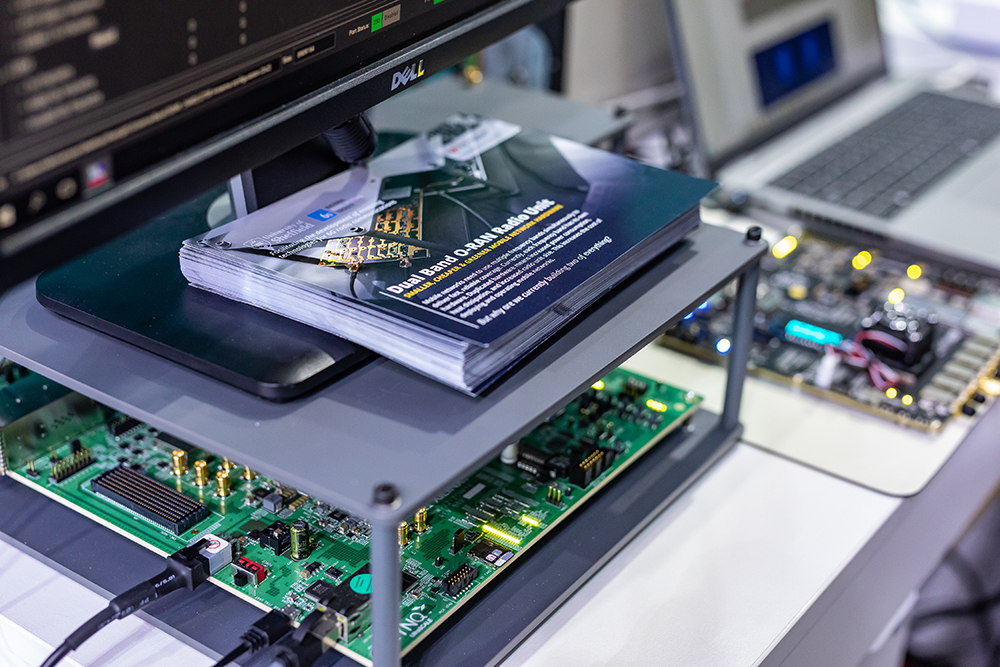
Dual Band O-RAN Radio Unit Demo

That last technique is worth pausing on. Power amplifiers are most efficient when operating close to their maximum output – but pushing them too hard distorts the signal. DPD corrects for that distortion digitally, allowing the amplifier to run at a more efficient operating point without sacrificing signal quality. It’s a meaningful contributor to reducing the overall power consumption of the unit. The result: fewer components, lower power draw, and a smaller physical footprint – without sacrificing performance.

Validated Against Industry Standards

Innovation in radio hardware only exists so far without interoperability. Open RAN – the disaggregated, vendor-neutral architecture that is reshaping how mobile networks are built – requires radio units to communicate with distributed units (DUs) from different suppliers using standardised interfaces.

The Sheffield prototype has been validated using the Keysight S5040A Distributed Unit Emulator, demonstrating compliance with the O-RAN 7.2x fronthaul interface specification. End-to-end testing confirmed that the dual band unit can exchange 5G NR signals cleanly across both frequency bands, with fronthaul synchronisation and RF chain performance verified across the full signal path.
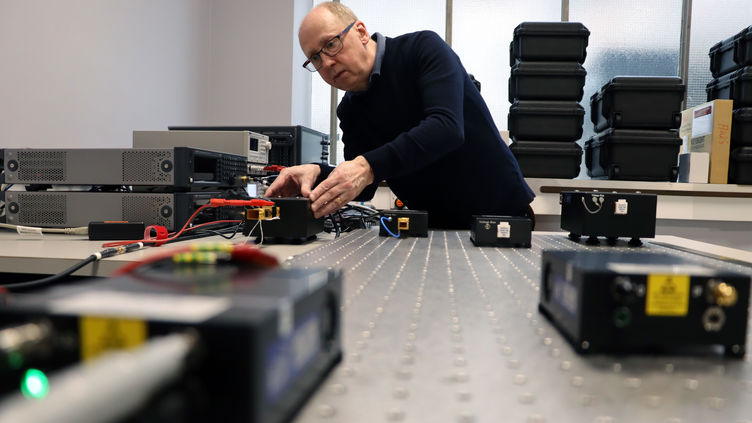

Professor Timothy O'Farrell FREng, 6G National Radio Systems Facility, University of Sheffield
Professor Timothy O’Farrell FREng, 6G National Radio Systems Facility, University of Sheffield
Professor Timothy O’Farrell FREng, University of Sheffield

This matters for the commercialisation pathway. A radio unit that works in a lab is one thing; a radio unit that can plug into a real Open-RAN ecosystem and interoperate with third-party DUs is quite another.

“The opportunity to present our neutral host, dual band, O-RAN radio unit technology at MWC was immensely valuable. The realisation of two concurrent, independent frequency bands on a unique single RF architecture yields significant cost and energy consumption savings. MWC and the HASC Hub provided the ideal environment to showcase this advanced radio technology, supporting our pathway to commercialisation and exploitation.”

~ Professor Timothy O’Farrell FREng,

Why This Matters Beyond the Lab

The implications of this work extend well beyond hardware engineering.

For network operators, a single compact radio unit covering two bands means lower capital expenditure on hardware, reduced installation complexity, and lower energy bills over the lifetime of the deployment. For operators running neutral-host models – where a single piece of infrastructure serves multiple operators or use cases – the ability to allocate the two bands independently is particularly powerful.

For vendors and the Open-RAN supply chain, simplified radio designs with fewer duplicated components reduce manufacturing costs and open up opportunities to deliver more competitive, sustainable products into a market that is increasingly cost-sensitive.

For society and the environment, the arithmetic is straightforward: lower-power radio units, deployed at scale across national and international networks, contribute significantly to reducing the energy footprint of mobile connectivity. At a time when both governments and operators are under pressure to demonstrate credible progress toward net-zero, such hardware-level efficiency gains matter.

The YO-RAN project, funded by DSIT, is one of a portfolio of research programmes housed within Sheffield’s National 6G Radio Systems Facility, a £2.4m testbed that provides one of the UK’s most capable platforms for physical layer 6G research.

What Comes Next

The prototype demonstrated at MWC is an early-stage proof of concept designed to establish that the architecture works and to inform the next phase of design refinement. Characterisation results from the prototype are now being used to optimise the hardware toward higher-TRL versions with improved RF performance and tighter integration.

The team is actively seeking research collaborators and industry partners to help accelerate that journey from prototype to deployment. If you’re working in network infrastructure, Open-RAN, spectrum policy, or sustainable connectivity and want to explore what a partnership might look like, get in touch.

6gfacility@sheffield.ac.uk  

The YO-RAN project is funded by the Department for Science, Innovation and Technology (DSIT). The National 6G Radio Systems Facility is funded by EPSRC. The work was presented at Mobile World Congress 2026, Barcelona, with support from the Hub for Access to the Spectrum Community (HASC).


 

Standards-Agnostic AI: Teaching Networks to Learn to Communicate for Themselves

HASC Research Pillar: C2 Adaptivity | Imperial College London

What if a wireless network could learn to serve you better – without needing to ask where you are, what device you’re holding, or which way you’re facing? That’s exactly the question a team at Imperial College London set out to answer.

AI-Enabled CSI-Free Networks Advanced Mobile Connectivity

Led by Professor Kin Leung and Dr. Nancy Nayak, this research sits at the heart of HASC’s Adaptivity pillar – a challenge focused on building networks that can intelligently respond to changing conditions in real time. Their approach: replace the rigid, standards-dependent methods that underpin today’s mobile networks with something far more flexible. An AI that learns.

“We are not just jumping on to the band wagon of AI – we have developed AI-based wireless communication technologies which are fundamentally different from the conventional technologies used today.” ~ Professor Kin Leung, Imperial College London

By designing wireless technologies with AI, we move beyond dependence on channel state information—unlocking faster development cycles and enabling networks to adapt to user needs and dynamic environments, unconstrained by standards.~ Dr. Nancy Nayak, Imperial College London

Why We’re Experimenting

The demand on wireless networks is accelerating. More users, more devices, more data – and the greater the expectation. People want and expect seamless connectivity everywhere, from city centres to crowded stadiums. Meeting those demands with today’s tools is increasingly difficult, and the gap between what users want and what networks can reliably deliver is widening.

The team at Imperial saw an opportunity to fundamentally rethink how networks allocate their resources. Rather than optimising within the constraints of existing standards, they asked: what if the AI could simply observe a network in action and learn the best way to manage it – without any of the traditional scaffolding?

The Industry Challenge

At the core of most modern wireless systems is something called Channel State Information, or CSI. This is data that describes the communication channel between a base station and a user’s device – think of it as the network’s way of understanding who’s where and how best to reach them.

The problem is that collecting and communicating CSI comes at a cost. For complex antenna systems (the kind increasingly used in 5G and future 6G networks) the overhead is significant. And because CSI exchange relies on standardised protocols, any improvement to the process must go through the slow, uncertain machinery of the international standards process, which can take years.

Base Station for Beam Forming - AI Enabled CSI-Free Networks

Add to this, the computational burden of recalculating antenna configurations as users move, and the challenge becomes clear: current approaches don’t scale well to the networks of tomorrow.

Our AI-Enabled Technology Innovation

The Imperial team has developed a Reinforcement Learning (RL) technique that sidesteps these constraints entirely. Their system allocates wireless resources (directing antenna beams and managing radio resources) without relying on CSI, user location data, or any information obtained through standardised protocols.

Instead, it learns. Using only the radio measurements already available within the network, the AI explores different resource-allocation strategies, receives feedback on what works, and progressively improves – just like a person learning a new skill through practice rather than instruction.

The results are striking. In testing, the approach achieves performance within 6% of the theoretical optimum for CSI-based methods – without any of the associated overhead. The system can also co-exist with conventional CSI-based approaches used by neighbouring base stations, making it compatible with real-world deployment scenarios.

Crucially, because the technology is standards-agnostic, operators don’t need to wait for industry alignment before deploying it. New antenna technologies and networking innovations can be adopted as soon as they’re ready.

The Impact of CSI-Free Networks 

The implications reach well beyond the lab. For network operators, this approach reduces complexity, lowers the cost of upgrades, and dramatically shortens the path from innovation to deployment. For users, it means more reliable connections in the places that matter most: busy transport hubs, large events, dense urban environments.

Dense Deployment - HASC Research Pillar- C2 Adaptivity | Imperial College London

Looking further ahead, the team is building a prototype for cellular network settings and exploring civilian and defence applications – with defence interest from Defence Science and Technology Laboratory (Dstl) and the Royal Air Force. The commercial opportunity is significant, with the short-term market for private 5G and enterprise networks estimated at $20–200 million, and long-term integration into baseband units pointing to a $0.5–1.5 billion opportunities. The global baseband unit market is ~$5–7B today and growing beyond $10B; as a core signal processing function (~5–20% share), resource allocations including beamforming underpin this serviceable segment  [1, 2, 3].

This is a project that doesn’t just improve a single component of how wireless networks function. It reframes how they can be built, deployed, and improved – putting adaptivity, rather than standardisation, at the centre.

Interested in this research or the path to commercialisation?  

We’re currently keeping our IP confidential while we finish our patent filings. At the same time, we’ve started building a live demo to show the tech in action. This demo is a key part of our spinout plan, as it will give investors a clear look at the value the new AI wireless technology brings to network users.

If you would like to get in touch with this project, please contact us here. 


From Innovation to Impact: HASC at MWC 2026

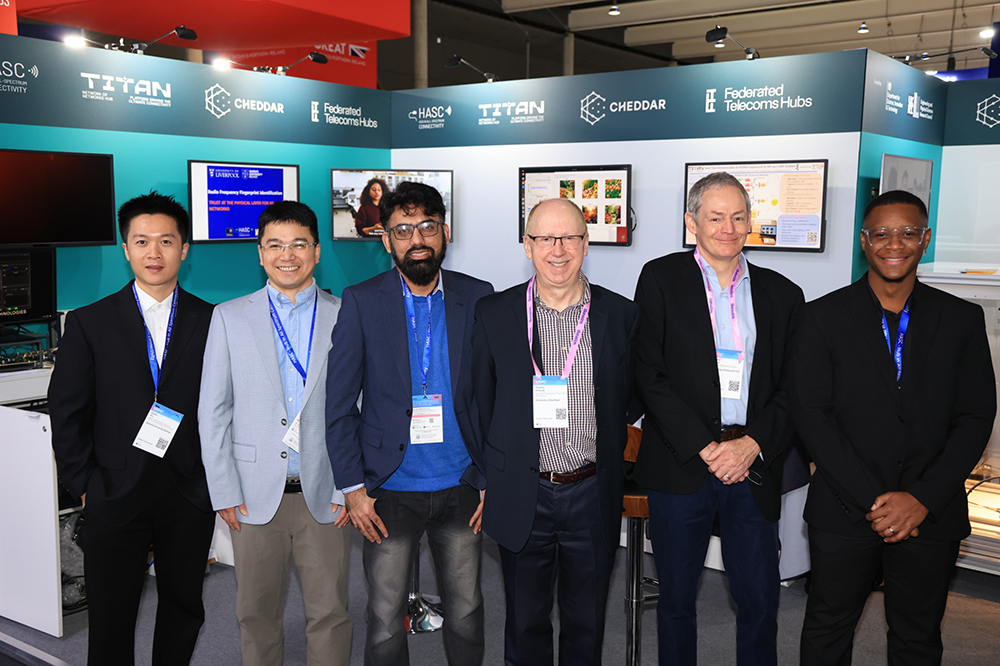
The HASC Team at MWC 2026
From left to right: Goulin Yin, Junqing Zhang, Mubasher Ali, Timothy O’Farrell, Dominic O’Brien, Anthony Reece-Thompson

The HASC MWC Wrap Up

Mobile World Congress (MWC) describes itself as the world’s largest and most influential connectivity event, and we don’t think that’s an exaggeration! Each year, it brings together tens of thousands of leaders from across the telecoms ecosystem – from industry, academia and government. It’s where people come to exchange ideas, innovation and perhaps most importantly, contact details. It’s where knowledge is shared and exciting new collaborations are conceived.

As the UK’s leading consortium focused on all-spectrum connectivity at the physical layer, HASC was proud to be part of this global conversation. We exhibited alongside our partners in the Federated Telecoms Hubs, TITAN, CHEDDAR and JOINER, demonstrating how advanced wired and wireless technologies are coming together to address real industry challenges and unlock smarter, faster and more secure network solutions, fit for our connected future.

Cutting Edge Technologies for Advanced Connectivity

The HASC Technology Showcase

This year, at MWC 2026, HASC showcased four cutting-edge innovations spanning physical layer security, advanced connectivity and intelligent, adaptive networks. These demonstrations brought together research from across our consortium, including the University of Liverpool & Queen’s University Belfast, the University of Sheffield, Imperial College London and the University of York.

Our featured demonstrations included:

Radio Frequency Fingerprint Identification (RFFI)

A Dual Band O-RAN Radio Unit

  • Enabling faster, smaller and more cost-efficient mobile network hardware 

AI-enabled CSI-free Resource Allocation

ORLANDO – O-RAN intelligent adaptive Load blaNcing and efficiency in highly Dense deplOyments

Each project addresses a critical challenge facing the networks of the future. We invite you to explore each demonstration in more detail, the problems being tackled and their potential impacts in our dedicated deep-dive articles (links above).

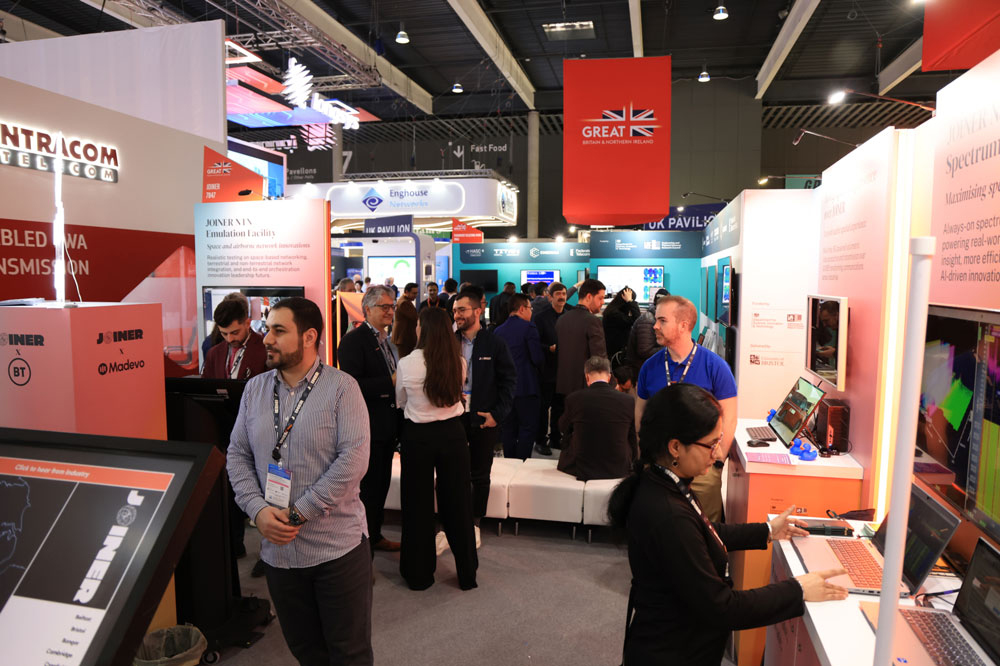
HASC exhibited as part of the UK Pavilion, Great Britain at MWC 2026
HASC exhibited as part of the UK Pavilion, Great Britain, alongside our partners FTH, JOINER, CHEDDAR & TITAN

Mobile World Congress 2026 – Our Insights from the Ground

There were many themes, trends and recurring topics that emerged throughout the week. Not just arising from discussions around our own technology showcase, but also content from throughout the show. It was interesting to see what was important to those we spoke to, what challenges were being tackled and how our Hub is playing a role. Here are our hot takes!

Bridging research and real-world impact

A consistent message throughout MWC was the importance of moving beyond theory and into applied, real-world environments. From live demonstrations on the exhibition floor to discussions around commercialisation, there was a strong emphasis on ensuring that research translates into deployable, scalable solutions with positive real-world impacts, something that the Federated Telecoms Hubs places great emphasis on.

AI and Quantum dominate frontier and emerging tech space

Perhaps unsurprisingly, Artificial Intelligence (AI) continues to play a defining role in the evolution of wireless systems but is now moving well beyond simple optimisation to enable more autonomous and adaptive networks. Alongside this, the growing prominence of quantum technologies was more visible than ever, especially within the area of security, infrastructure and network resilience.

Tackling complexity through smarter, more efficient design

As networks become more advanced, managing complexity while improving performance is becoming increasingly critical. Innovations showcased at MWC demonstrated how integrated approaches – combining capabilities within single architectures – can deliver significant gains in efficiency, cost reduction and energy consumption. This reflects the wider industry momentum toward developing more streamlined, high-performance systems.

The importance of real-world validation

We were grateful for the opportunity to bring live demonstrations to MWC. Our team were excited by the challenging environment where we were able to run our demonstrations in real life. MWC’s exhibition floor is the very definition of a high-density, crowded scenario – something that cannot be easily replicated in the lab. We were thrilled with the outputs of the Radio Frequency Fingerprint Identification (RFFI) demo – this kind of validation is essential in accelerating the journey from ‘lab to life’.

“We were proud to showcase our radio frequency fingerprint identification technology at MWC Barcelona, one of the world’s premier events for mobile and wireless innovation. The event provided a valuable opportunity to engage with industry leaders, present our research, and gather insightful feedback from across the telecommunications ecosystem. Demonstrating our system in the dense and challenging electromagnetic environment of the exhibition floor allowed us to test its robustness under real-world conditions. The experience strengthened our confidence in the technology while also inspiring new ideas for future research. We sincerely thank the HASC team for this excellent opportunity and for their continued support in making our participation possible.” ~ Dr Junqing Zhang, University of Liverpool


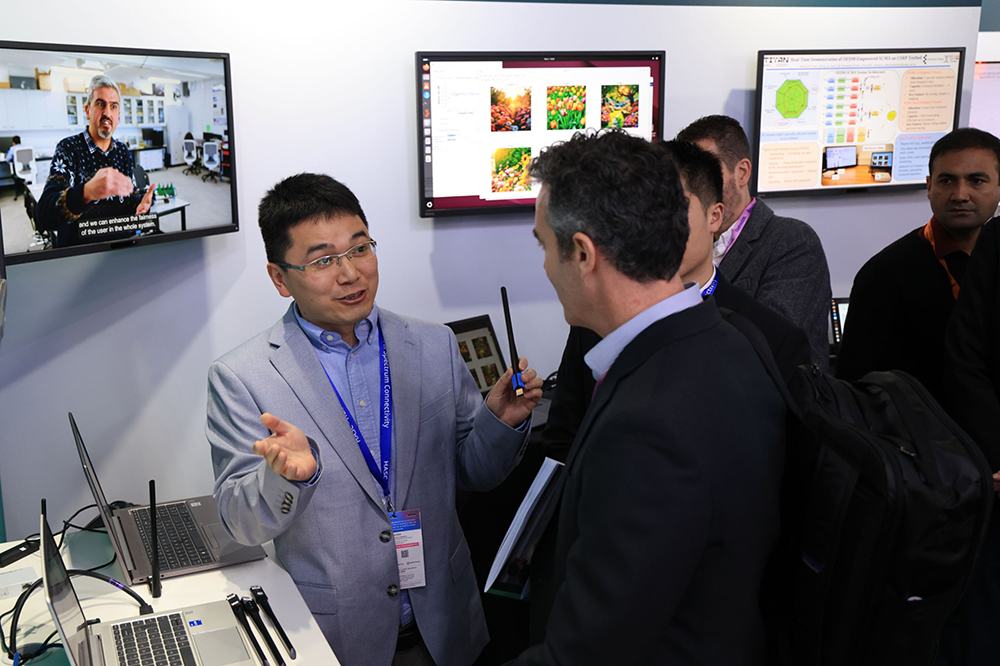
Junqing Zhang discusses Radio Frequency Fingerprint Identification (RFFI) with Kevin Adams OBE, Department for Science, Innovation and Technology (DSIT) at MWC 2026
From left to right: Junqing Zhang discusses Radio Frequency Fingerprint Identification (RFFI) with Kevin Adams OBE, Department for Science, Innovation and Technology (DSIT)

Collaboration as a catalyst for innovation

MWC saw a significant volume of traffic this year, as it always does. We were once again impressed by the sheer volume of delegates and the diversity of those who exhibited and attended. The depth of expertise and wide-ranging experience of those we talked to were truly impressive. Being in an environment that facilitates such important conversations reinforces our belief that collaboration and knowledge sharing across sectors and even across borders remain key to future advancements.

Industry Engagement & Collaboration

Of course, MWC is a significant opportunity for us to engage with all our stakeholders, but the main focus for us at a show like this is industry. How do we develop more links with industry and cultivate partnerships? HASC does not exist in a bubble – we want to share our research and the innovation coming out of the labs of the country’s leading universities. The goal is always to realise real world impact.

The four demonstrations we showcased at MWC represent just a small snapshot of HASC’s work. They sit within a much broader programme of cutting-edge research, focused on the physical layer – the foundation of all telecommunications systems.

Our work spans the full spectrum of connectivity, from optical and free-space communications through to advanced radio technologies. This includes areas such as channel measurement, standards development, reconfigurable intelligent surfaces (RIS), and techniques to improve spectral efficiency and expand the usable radio spectrum.

Crucially, HASC is focused not only on advancing fundamental research, but on ensuring that these innovations translate into real-world impact. We are actively working to commercialise our research and collaborate with industry to accelerate deployment.

We are already partnering with leading organisations, including major carriers such as BT, and we continue to welcome new collaborations. Through HASC, industry partners can access:

  • De-risked innovation through proof-of-concept experimentation
  • State-of-the-art facilities
  • Opportunities to co-develop, pilot and scale emerging technologies
  • Licensable intellectual property
  • Collaboration on standards development
  • Access to highly skilled researchers from across our consortium

If you are interested in the opportunities that exist to collaborate with our consortium, please complete this form and we will get in touch with you directly. 

What’s next?

The conversations and insights from MWC 2026 have reinforced both the pace of change across the sector and the importance of collaboration in shaping its future. As networks continue to evolve, the convergence of wired and wireless technologies at the physical layer will play a critical role in enabling more intelligent, efficient and adaptable connectivity.

If you are interested in collaborating with HASC, we would be delighted to start a conversation. Please get in touch here.

When Networks Get Congested, People Lose More Than Just Signal

Meet ORLANDO – the AI-powered xApp making wireless networks smarter, safer, and more resilient

Picture a busy summer festival. Thousands of people are live-streaming, uploading, chatting and scrolling – and then an emergency happens. First responders try to make contact, but the network is overloaded. They can’t get through.

Network congestion isn’t just frustrating. In critical moments, it can be dangerous. This is exactly the problem that researchers at the University of York, in collaboration with Imperial College London, are working to solve – through a project called ORLANDO (O-RAN intelligent adaptive Load blaNcing and efficiency in highly Dense deplOyments).

Why We’re Experimenting

As we move towards 6G, networks must serve more devices, more applications, and more people – all at once, and in dense environments. The ability to balance traffic intelligently and adapt in real time, is no longer a nice-to-have. It’s essential.

ORLANDO sits within the HASC Core Challenge on Adaptivity: a research programme dedicated to building networks that can think, learn, and self-optimise. The project is investigating how AI and machine learning (ML) can be embedded directly into Open RAN (O-RAN) architecture to manage load balancing at scale.

The Industry Challenge

Dense O-RAN networks struggle to maintain performance under uneven traffic loads. When demand spikes (at a concert, a sports stadium, or a major public event for example) spectrum is wasted, latency climbs, and quality of service degrades. Traditional, rule-based systems simply can’t respond fast enough to keep up with the unpredictability of real-world demand.

Our Technology Innovation

ORLANDO is an AI-powered xApp – a software application that runs within the O-RAN Intelligent Controller (RIC) – designed to perform real-time network slicing and intelligent load balancing. Using a digital twin integrated with live network data and precise access point locations, the system simulates and optimises performance across different user load scenarios before applying changes to the live network.

The team is also training a traffic prediction ML model on real user movement and traffic data – and fine-tuning a generative AI to produce synthetic data for new or unforeseen environments. This makes ORLANDO not just reactive, but predictive.

The Impact of the ORLANDO Project

Already tested on the York O-RAN testbed – and due to be trialled in a real-world deployment in Blackpool – ORLANDO is designed to deliver tangible benefits: dynamic traffic prioritisation, optimised Quality of Service (QoS), and reliable connectivity for critical services, even at peak demand.

For citizens, this means fewer dropped calls, less buffering, and the confidence that emergency services will always be able to get through – even in a crowd. For industry, it signals a new era of intelligent, self-optimising networks – built not just for today’s demands, but for whatever comes next.

ORLANDO Team Showcase

The ORLANDO team, from left to right: Dr Yi Chu, Dr. Swarna Chetty, Dr. Mostafa Rahmani & project lead, Hamed Ahmadi, PhD, SM IEEE, FHEA

“In ORLANDO we move a step forward towards the AI-Native networks where we learn the user behaviour and train a scalable ML to predict network load and allocate network resources accordingly.” ~ Dr. Hamed Ahmadi, Reader in Digital Engineering

To connect directly with the ORLANDO researchers, register your here

See ORLANDO – The Intelligent Load Balancing xApp from University of York

Links, Papers & Further Resources    


Connect with Hamed Ahmadi